
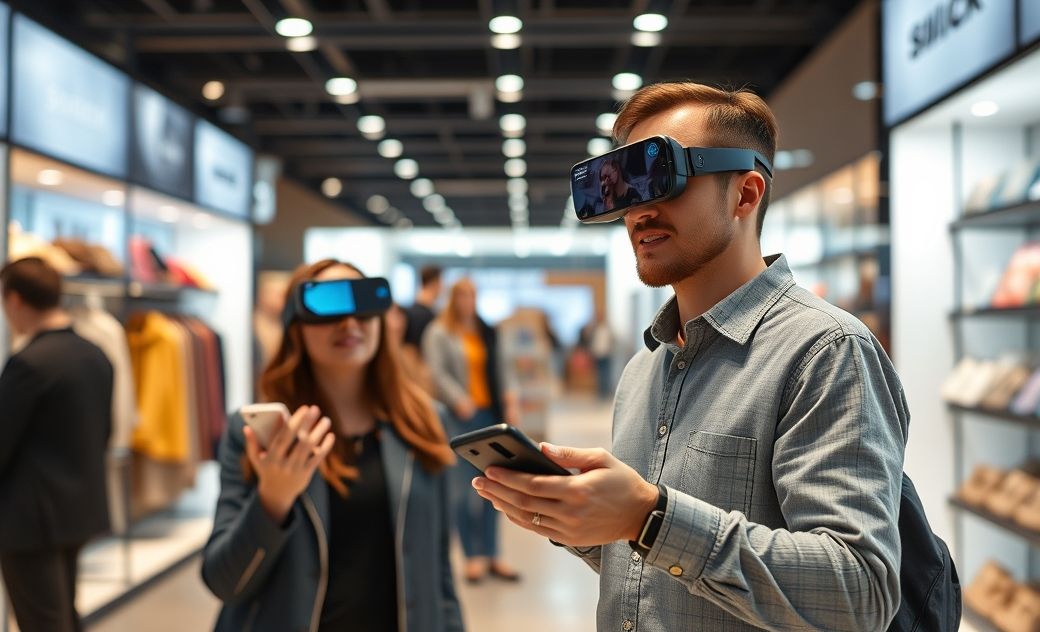
With the rapid evolution of technology, the retail industry is experiencing a seismic shift, and augmented reality (AR) is at the forefront of this transformation. By overlaying digital information onto the physical world, AR is revolutionizing how customers interact with products, enhancing their shopping experiences, and fundamentally changing the way retailers operate.
Enhancing Customer Interactions
Augmented reality opens up new avenues for immersive customer experiences that were previously unimaginable. Retailers are leveraging AR to provide customers with an interactive layer of information and virtual experiences related to the products they are interested in.
Virtual Try-Ons
One of the most popular AR applications in retail is virtual try-ons. With AR, customers can try on clothes, accessories, or makeup without physically touching the products. This feature reduces the hassle of fitting rooms and allows customers to experiment with different styles and combinations using their smartphones or in-store devices.
Product Visualization
AR enables customers to visualize products in their own environment before making a purchase decision. Whether it’s furniture, home decor, or even vehicles, AR applications allow users to see how items will look and fit in their spaces, reducing the uncertainty and eliminating doubt from the buying process.
Streamlining Store Operations
In addition to enhancing customer experiences, AR is also streamlining store operations. From inventory management to staff training, augmented reality tools provide solutions that increase efficiency and productivity for retailers.
Inventory Management
AR applications can help store employees with inventory management by providing real-time data about stock levels. Using AR glasses or mobile applications, staff can quickly scan the shelves to identify which items need restocking, thereby reducing the time spent on manual inventory checks.
Employee Training
Training new employees can be a costly and time-consuming process. However, with AR, interactive training sessions can be created to simulate real-life scenarios, allowing employees to learn and practice in a virtual environment. This not only speeds up the training process but also makes it more engaging and effective.
Boosting Customer Engagement and Loyalty
AR technology is not only enhancing the shopping journey but also increasing customer engagement and driving loyalty. By offering unique, personalized experiences, retailers are creating deeper connections with their customers.
Personalized Shopping Experiences
Using AR, retailers can offer personalized recommendations based on a customer’s buying history and preferences. When customers engage with AR content in-store or online, the data collected can be used to tailor promotions, suggesting products that are most relevant to each individual, thus enhancing the personal shopping experience.
Interactive and Fun Shopping
AR can turn shopping into a captivating experience by gamifying retail. Interactive AR games and adventures can be integrated into stores, offering customers rewards or discounts as they participate, increasing foot traffic and time spent in-store, and ultimately boosting sales conversions.
The Future of AR in Retail
As AR technology continues to evolve, its integration into the retail space is set to become more sophisticated and widespread. With advancements in mobile technology and increased consumer readiness, the full potential of augmented reality in retail is just beginning to unravel.
The future will likely see more cross-platform AR integrations, allowing seamless transitions between online and offline experiences and fostering an omnichannel retail environment. As retailers adapt, the boundaries of customer engagement will continue to expand, paving the way for a more connected, informed, and interactive shopping experience.
In conclusion, augmented reality is not just a passing trend but a critical component of modern retail strategy. By embracing AR, retailers can not only enhance the customer experience but also streamline operations and foster customer loyalty, ensuring a competitive edge in an increasingly digital world.
