
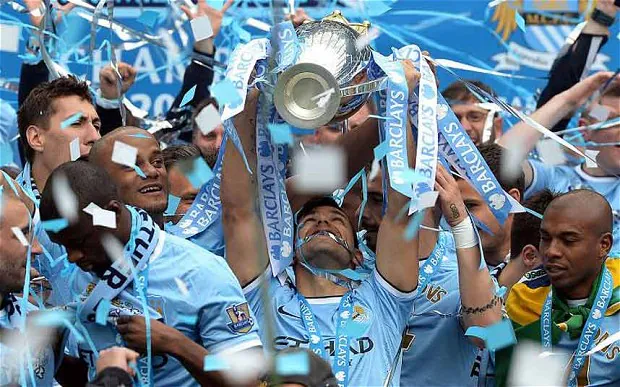
The 2013/14 Premier League season remains one of the most volatile and high-scoring campaigns in modern football history. Characterized by a relentless title race between Manchester City and Liverpool, the season produced a remarkable volume of goals that frequently shifted match outcomes in the dying minutes. For analytical observers focusing on live markets, understanding which teams specialized in these late-game surges provides a historical blueprint for reading in-play momentum. Evaluating the tactical triggers and statistical realities of that specific year reveals how late goals are rarely accidental, but rather the product of predictable tactical shifts, physical fatigue, and squad depth.
The Analytical Value of the Final 15 Minutes in the 2013/14 Campaign
Evaluating football matches through a situational lens requires breaking the 90 minutes down into distinct tactical phases. The final quarter of an hour, spanning from the 76th minute to the final whistle, represents a period where tactical discipline frequently breaks down due to psychological pressure and physical exhaustion. In the 2013/14 season, this specific window yielded an unusually high concentration of critical goals that redefined the league standings.
When a dominant team requires a breakthrough or an underdog faces structural collapse, the probability of goalmouth action increases exponentially. Analyzing this specific time frame allows live market participants to bypass pre-match assumptions and focus purely on the immediate conditions unfolding on the pitch. The value inherent in these final minutes stems from the inflation of odds for late goals, making precise statistical targeting a highly profitable exercise when aligned with historical team behaviors.
Statistical Leaders in Late-Stage Goal Production
To effectively exploit the final 15 minutes of a match, an analyst must isolate the specific teams that historically demonstrated a high proficiency for scoring during this window. The 2013/14 season featured several clubs that consistently altered the scoreline late in the game, driven by deep squads or aggressive attacking philosophies that intensified as the clock wound down.
Before reviewing the specific performance data of the top-performing clubs during this campaign, it is necessary to recognize that total goal volume must be weighed against situational consistency. A team that scores multiple late goals across consecutive matches offers far more reliable in-play indicators than a team that scores a cluster of goals in a single blowout victory. The following breakdown highlights the clubs that proved most lethal in the final fifteen minutes of matches throughout the 38-game season.
- Manchester City: The eventual champions utilized their immense squad depth, often introducing elite attacking substitutes who exploited tired defensive lines, resulting in 22 goals scored after the 75th minute.
- Liverpool: Driven by an ultra-aggressive tactical system under Brendan Rodgers, their high-tempo pressing frequently forced opposition errors late in games, yielding 19 goals in the final phase.
- Arsenal: Known for their patient buildup, Arsène Wenger’s side excelled at unlocking exhausted, low-block defenses through intricate passing sequences in the closing stages, registering 17 late goals.
- Chelsea: Under José Mourinho, the Blues specialized in transitional counters when opponents pushed forward for equalizers, capitalizing on structural overcommitments to secure 15 late-stage tallies.
This statistical distribution demonstrates that late-game proficiency was heavily concentrated among the league’s elite top-four finishers. The data underscores a clear correlation between a club’s overall goal-scoring capacity and its efficiency in the final 15 minutes. For someone tracking live matches, seeing these specific teams level or trailing after the 75th minute served as a primary signal that the match total or next-team-to-score markets contained significant unrealized value based on seasonal patterns.
Tactical Drivers Behind Late Goals
Understanding the statistical reality of late goals is only valuable if one comprehends the underlying mechanisms that cause defensive structures to fail. During the 2013/14 season, managers increasingly adopted high-pressing systems that demanded immense physical output from midfielders and defenders, creating distinct tactical vulnerabilities late in the second half.
Structural Fatigue and Tactical Desperation Mechanisms
When a team defends in a compact low-block for over an hour, cognitive fatigue becomes just as detrimental as physical exhaustion. As the match enters the 76th minute, spacing between the defensive and midfield lines naturally widens, offering creative attackers more space between the lines to operate. Concurrently, chasing a match forces trailing managers to abandon defensive shapes entirely, opting for direct, high-risk vertical passing that either results in a late equalizer or leaves them exposed to devastating counter-attacks.
In-Play Reading Indicators for Late Goals
Successful live market engagement requires an observer to identify visual triggers on the pitch that validate historical statistics. Relying solely on past data is insufficient; one must verify that the current match dynamics align with the expected high-probability outcomes before committing capital to a live position. Key indicators include a noticeable drop in a team’s defensive recovery speed, an increase in tactical fouls stopping transitions, and the introduction of physical target men or high-pace wingers from the bench.
When observing these specific conditions manifest in real-time, matching the visual evidence with a reliable digital sports betting service becomes the final operational step. Experienced analysts who recognize these late-game patterns often track shifting totals through the interface provided by ufabet mobile, where live odds dynamically adjust to the frantic pace of the final fifteen minutes. Utilizing such a betting platform ensures that when a high-pressing team begins to show clear signs of defensive fracturing, the observer can execute a position instantly before the market fully prices in the impending goal.
When the Late-Goal Trend Fails to Materialize
While targeting late goals can be highly lucrative, an analytical framework must account for failure cases where historical trends are negated by immediate situational factors. No statistical pattern holds true in every scenario, and recognizing when a trend will break is crucial for preserving capital over a long-season campaign.
In situations where a high-scoring team has already secured a comfortable three-goal lead by the 70th minute, the tactical incentive to score evaporates entirely. Managers intentionally slow down the tempo of the game, utilizing possession to retain energy rather than taking risks to penetrative defensive lines. Conversely, if a match features two teams fighting relegation who are both content with a single point, the final 15 minutes often devolve into defensive caution with zero attacking intent.
If a match presents these low-variance characteristics, turning away from sports markets toward an entirely different digital entertainment environment can be a pragmatic choice. Analysts who find the live football markets stagnant during these predictable lulls often shift their focus toward the mathematically fixed probabilities found on a premier casino online website. Transitioning to a virtual casino environment provides a controlled alternative where outcomes are governed by independent random number generators rather than the unpredictable motivational shifts of tired athletes on a pitch.
Market Dynamics and Odds Movements in the Final 15 Minutes
The financial viability of backing late goals rests entirely on how the live market prices the probability of a goal occurring as time diminishes. As the clock ticks closer to the 90th minute, the odds for an additional goal rise exponentially, creating a high-reward environment for those who time their entries correctly.
To exploit these market inefficiencies, an analyst must understand the relationship between time decay and odds inflation. The betting public naturally assumes that less time means less opportunity for scoring, which causes the price of the “Over” market or the “Next Goal” market to surge rapidly after the 75th minute. The following structural timeline outlines how an analyst should evaluate market entry points during this critical late phase.
| Time Window | Market Condition | Tactical Consideration | Action Implication |
| 75′ – 80′ | Odds begin to double from pre-match baselines | Substitutions alter game state | Initial entry for high-probability teams |
| 80′ – 85′ | Rapid price inflation; high value on single goal | Defensive lines drop deeper | Secondary entry if attacking pressure intensifies |
| 85′ – FT | Maximum leverage; odds often exceed 4.00 | Total tactical abandonment | High-risk, high-reward speculative position |
Interpreting this matrix requires balancing the diminishing time on the clock against the intensity of the on-field pressure. If a dominant team from the 2013/14 season, like Manchester City, was chasing a winner at home, entering the market between the 75th and 80th minute offered the optimal convergence of high tactical probability and enhanced odds value. Waiting until after the 85th minute offers extreme financial leverage but reduces the statistical window to a point where random variance heavily outweighs structural analysis.
Summary
The 2013/14 Premier League season provided definitive historical proof that late-game goal scoring is a highly structured phenomenon driven by specific elite clubs. By analyzing statistical leaders like Manchester City and Liverpool, understanding the physical mechanisms of structural fatigue, and reading real-time in-play indicators, market participants can identify highly profitable opportunities in the final 15 minutes of a match. Success relies on avoiding low-incentive matches, understanding the rapid inflation of live odds due to time decay, and executing positions with discipline when on-field metrics validate the historical data.
